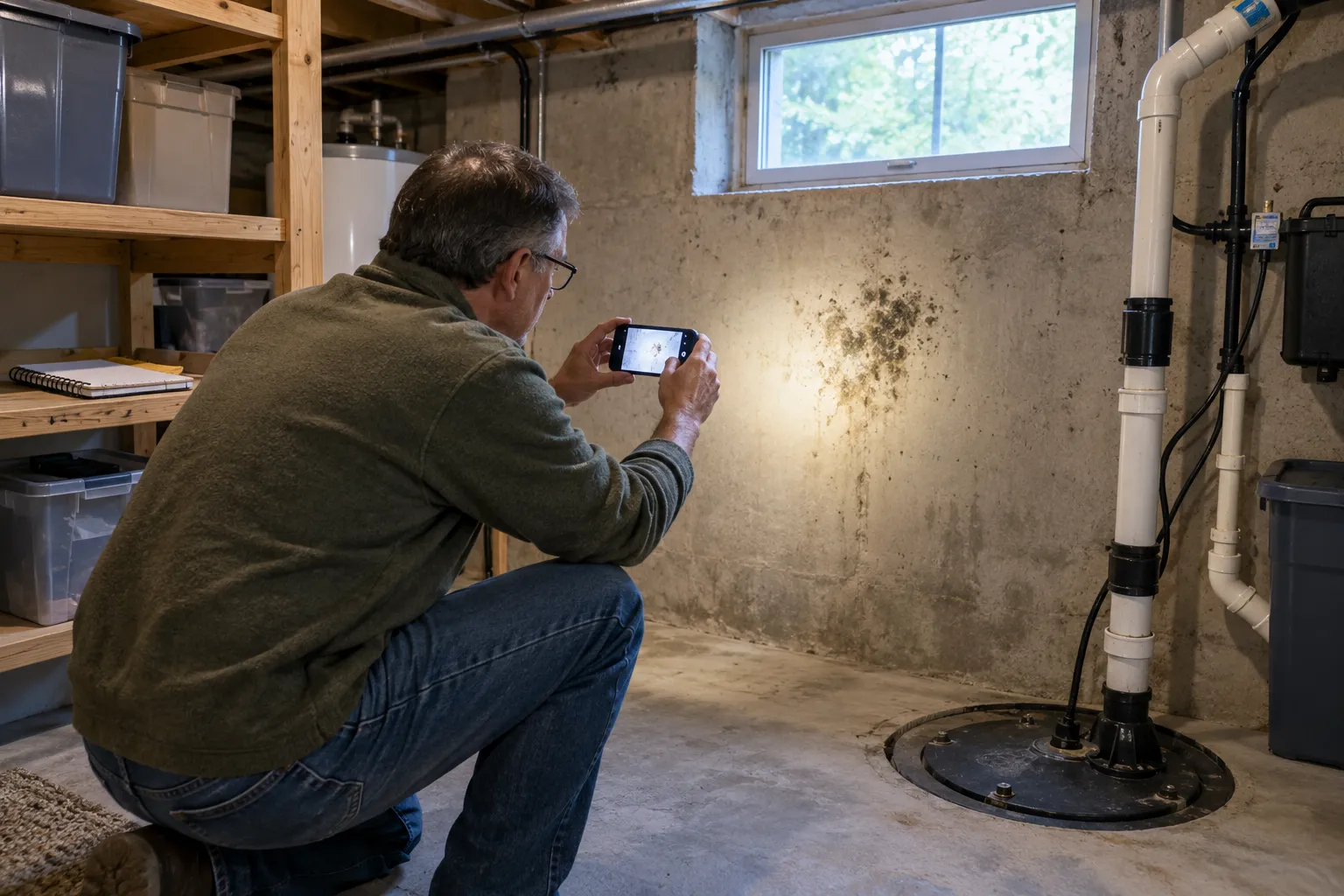
Black mold is a dark, spotty growth that feeds on damp drywall, wood and insulation. It tends to show up after leaks, floods, or long stretches of muggy air. Homes in the Dayton area deal with all three, so basements, attics and bath walls get checked often.
Varietyrussian Mold Help is a referral service. We do not do the removal. We connect you with independent local providers who handle containment, cleanup and drying. This page shows what you can safely do yourself, where to stop, and how to keep photos and notes ready. Being organized helps when you request an estimate. It can also help if you talk with your insurer. Start with a few clear pictures and a quick call.
Found black mold? Start here
Dark, fuzzy or slimy spots on a wall, ceiling or beam? Stop. Do not scrub it yet. Scrubbing sends spores into the air.
Do these four things first:
- Photograph it first. Take one wide shot and one close-up.
- Close the door to that room.
- Switch off fans and vents that blow across the spot.
- Write down the date, the place, and what you see.
Small patch, quick call. Request a callback to check provider availability near you.
What "black mold" really means
People use the name for any dark growth. Color alone cannot tell you the type. Only lab testing can. So treat every dark patch with care until a provider has looked at it.
Some people react more than others. Kids, older adults, and people with asthma or allergies may notice coughing or itchy eyes. Ask your doctor about any health worries.
Where it likes to hide
Mold needs moisture and something to eat. Houses give it plenty of both. Check these spots with a flashlight:
- Basement walls and the bottom of framing, near the sump pit
- Rim joists where cold air meets warm air
- Attic roof decking, after hail or ice dam leaks
- Behind bath fans, under sinks and around the water heater
- Closets on outside walls
- Crawl spaces and under old carpet
Cold winters and muggy summers make this worse. Spring melt and storm water do too. Older frame houses leak air and moisture in odd places.
Know where to stop
A small, surface-level spot on a hard surface may be a DIY job. A common rule of thumb is a patch smaller than about ten square feet. Even then, wear an N95 or better mask, gloves and goggles. Open a window and keep the spot damp-wiped, not dry-brushed.
Stop and get a provider if you see any of these:
- The patch is bigger than a few feet across
- It is on drywall, insulation, or ductwork
- The smell is strong and the source is unclear
- Water came in from a flood or sewage
- Anyone in the home has breathing trouble
Why bleach usually isn't enough
Bleach can lighten a stain. It often does not reach the roots in porous stuff like drywall, wood, and ceiling tile. The color fades, but the growth stays. Then the damp comes back and so does the mold.
Mixing bleach with other cleaners can also make dangerous fumes. Skip the mix-and-spray approach. Let a provider choose the right method for each surface.
How black mold removal works
Every provider has their own process. Most follow the same basic path:
- Assess. They look at the size of the area and find the moisture source.
- Contain. They seal the work zone with plastic sheeting so spores stay put.
- Filter. They run HEPA air scrubbers to catch loose particles.
- Remove. Soaked drywall, insulation, or carpet gets cut out and bagged.
- Clean. Wood framing and hard surfaces get scrubbed and vacuumed with HEPA tools.
- Dry. Fans and dehumidifiers bring the area back to normal moisture.
A good provider explains each step before it starts.
Fix what caused it
Removal without a fix is a short-term win. Ask the provider what fed the mold. Then check the usual suspects yourself:
- Is the sump pump running? Test it with a bucket of water.
- Do gutters and downspouts carry water away from the foundation?
- Does the soil slope away from the walls?
- Does the bath fan vent outside, not into the attic?
- Is a dehumidifier holding the basement near 30 to 50 percent humidity?
Some fixes, like a roof or plumbing repair, need a separate trade. Your provider may point you in the right direction.
What about your belongings?
Hard items like glass, metal, and plastic can often be wiped clean. Soft items are harder. Mattresses, upholstery, and cardboard boxes may need to be tossed if they are moldy.
Before anything goes in the trash, photograph it. Keep a simple list with the item, its age, and a guess at its value. Ask the provider what they can clean and what should go.
Get your paperwork ready
A tidy folder makes every conversation easier. Keep these in one place:
- Dated photos of the mold, the damp source, and the room
- Notes on when you first saw it and what changed
- Receipts for fans, filters, or supplies
- Written quotes and invoices
Some policies may cover sudden damage, like a burst pipe. Others do not cover slow leaks. Check your policy and talk to your insurer. Providers can often help document damage for a claim.
Questions to ask the provider
Write these down before you talk. Ask each one:
- Will you find and report the moisture source?
- How will you contain the area?
- What is in the written quote, and what could change it?
- Will you do a follow-up check after the work?
- Is the work covered by a written warranty from you?
- Do you carry the licenses your area requires?
Compare at least two quotes if you can. Request an estimate with no obligation and take your time.
After the work is done
Keep watching the area for a few weeks. Sniff for musty odors. Peek at the spot with your flashlight. Take new photos and add them to your folder.
If the spot looks darker or the smell returns, tell the provider quickly. It may mean the moisture is still there.
What's Included
Containment of the work area
Plastic barriers and filtered air help keep spores out of the rest of your home.
Removal of damaged materials
Soaked drywall, insulation or carpet that cannot be cleaned safely is cut out and bagged for disposal.
HEPA cleanup
Framing and hard surfaces get scrubbed and vacuumed with HEPA tools.
Drying and checking
Fans and dehumidifiers dry the area, then the provider rechecks for lingering moisture.
What black mold removal typically costs
Prices vary a lot by job size, material and location in the house. These are typical U.S. ranges only. Ask each provider for a written quote that lists what is included.
| Item | Typical range | Notes |
|---|---|---|
| Small area, one wall or corner | $500 – $1,500 | Hard surfaces cost less than drywall |
| Full room cleanup | $1,500 – $4,000 | Depends on how much material is removed |
| Attic or crawl space | $2,000 – $6,000 | Tight access adds labor |
| Large basement job | $3,000 – $10,000 | Often includes drying equipment |
| Lab testing or air samples | $300 – $1,000 | Varies by number of samples |
| Drywall and finish replacement | $1,000 – $3,000 | Often a separate line item |
How It Works
Photograph and log
Take clear photos, write the date and spot, and keep the area closed off and fans off.
Reach a provider
Request a callback or send the request form to connect with an independent local provider.
Review the written quote
Check scope, materials, drying plan and any follow-up check before you agree to anything.
Provider does the work
The provider contains, removes, cleans and dries, then you recheck the area and keep records.
Why Call Varietyrussian Mold Help
Less time searching
Request a callback to reach an independent local provider in our network, so you spend less time browsing and comparing on your own.
Local providers
Providers in our network work in homes like yours, with damp basements and older framing.
Paperwork-ready
Photos and notes in hand make your estimate request clearer and faster to price.
No obligation
Request an estimate, compare quotes, and decide on your own schedule without any pressure.
Other Services
Need black mold removal in Dayton?
- Independent local providers handle inspection, testing and removal
- Photos and notes ready
- Request an estimate, no obligation
- Simple steps for homeowners
Black Mold Removal FAQ
Can I remove black mold myself?
A small patch on a hard surface may be a DIY job with a mask, gloves and goggles. Anything larger, or on drywall or insulation, is safer in a provider's hands. Know where to stop.
Is black mold dangerous to live with?
Mold can bother people with asthma, allergies or weak immune systems. Color alone does not show the type. Limit contact, keep the area closed off, and ask your doctor if anyone feels unwell.
Does bleach kill black mold?
Bleach may lighten stains on hard surfaces, but it often misses the roots in porous materials like drywall and wood. The mold can return if moisture stays. A provider can choose a better method.
Areas we cover
Dayton Trotwood Vandalia Huber Heights Centerville Englewood Fairborn Xenia West Carrollton
Request a callback
Questions about a musty smell or a spot on the wall? Send a note to contact@varietyrussian.garden or use the request form, and we will point you to a local provider.
No obligation